

Liaison Office, Branch or Subsidiary: How a Foreign Company Enters Türkiye

Before it forms a company, a foreign investor chooses a vehicle: a liaison office that cannot trade, a branch of the parent, or a Turkish subsidiary.

Av. Onur ÇalışıcıPublished 17 July 2026 · Updated 26 October 2026 · 9 min read
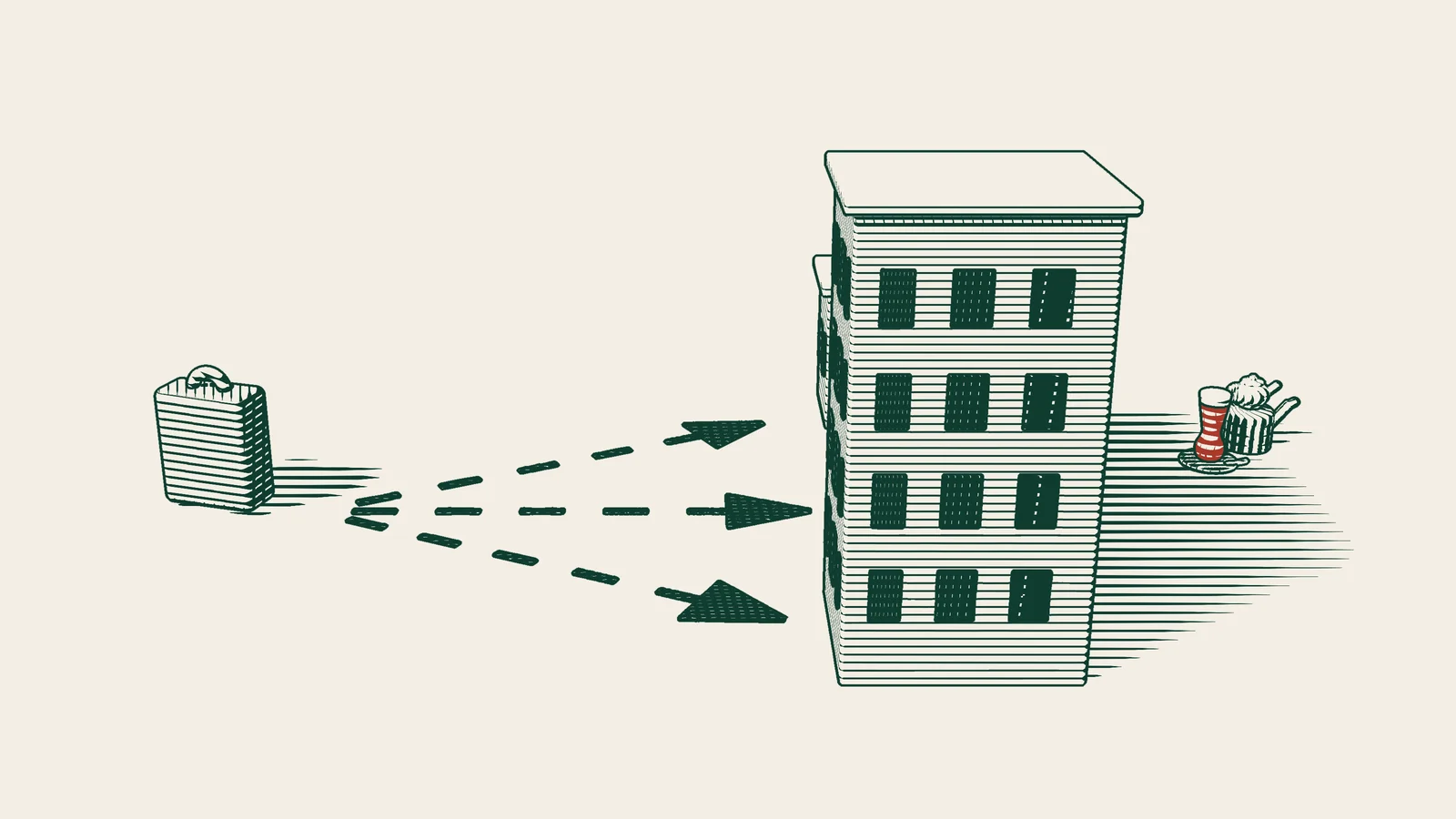
Engraving: three arrowed paths lead from a suitcase to a small office, a medium building and a large building, with a Turkish tea set beside them.

In brief

  1. Türkiye treats foreign and domestic investors equally under the Foreign Direct Investment Law No. 4875 — investment is free and needs no prior permission. The real decision is the vehicle: a liaison office, a branch, or a subsidiary.
  2. A liaison office (irtibat bürosu) may not trade or earn income in Türkiye; it only represents the parent. The permit comes from the Ministry of Industry and Technology and is granted for up to three years, extendable.
  3. A branch (şube) has no separate legal personality — it is an extension of the foreign parent — and is taxed as a limited taxpayer (dar mükellef) only on its Türkiye-source income.
  4. A subsidiary (A.Ş. or Ltd. Şti.) is a separate Turkish legal entity, taxed as a full taxpayer (tam mükellef) on worldwide income. It is the default choice for a foreign investor that intends to trade, hire and grow.
  5. Minimum share capital, in force since 1 January 2024: 250.000 TRY for an A.Ş. and 50.000 TRY for a Ltd. Şti. The general corporate income tax rate is 25% (reduced to 20% on qualifying export earnings).
  6. Time-critical: existing companies whose capital is below these amounts must top it up by 31 December 2027, the deadline as extended by the Ministry of Trade in October 2026, or be deemed dissolved (TTK Provisional Article 15).

This guide compares the three on legal status, tax and cost.

A foreign company setting up in Türkiye chooses one of three vehicles, and the choice is made before any company is formed. A liaison office (irtibat bürosu) represents the parent but may not trade or earn a lira. A branch (şube) lets the foreign parent operate directly, without creating a separate entity. A subsidiary — an anonim şirket (A.Ş.) or limited şirket (Ltd. Şti.) — is a distinct Turkish company the parent owns. The framing rule is that Türkiye does not treat foreign capital as a special case: under the Foreign Direct Investment Law No. 4875, investment is free, needs no prior permission, and foreign investors are placed on equal terms with domestic ones. So the question is not whether you may invest, but through what structure — and the three answers differ sharply on legal status, tax and cost.

A briefcase in front of three buildings of rising size: a small liaison office, a medium-sized branch and a large company building.
The structure a foreign company chooses shapes how it enters Türkiye.

Should a foreign company open a liaison office, branch or subsidiary in Turkey?

A foreign company entering Türkiye should choose its corporate structure based on commercial intent, liability appetite, and capital requirements:

  • Choose a Liaison Office (İrtibat Bürosu): If your goal is strictly non-commercial representation, local coordination, or supplier oversight. Under Foreign Direct Investment Law No. 4875 Article 3(h), the Ministry of Industry and Technology is authorized to permit liaison offices provided they do not engage in commercial activities. Under Article 8 of the Regulation on the Implementation of the Foreign Direct Investment Law, permits are issued for a maximum term of three years; for liaison offices operating for market research or promotion of products/services, this term cannot be extended.
  • Choose a Branch (Şube): If you intend to execute commercial contracts directly on behalf of the foreign parent. Registered with the trade registry under Turkish Commercial Code No. 6102 (TTK) Article 40(4) through a fully authorized commercial representative residing in Türkiye, a branch does not possess separate legal personality from the parent company. Consequently, the foreign parent bears direct, unlimited liability for all debts, contracts, and obligations incurred by the branch.
  • Choose a Subsidiary (Anonim Şirket or Limited Şirket): If you intend to trade, hire employees, build a local balance sheet, and ring-fence parent liabilities behind independent corporate personality. A subsidiary is an independent Turkish legal entity whose shareholders have limited liability. Under Presidential Decree No. 7887 (effective 1 January 2024), statutory minimum share capital is 250.000 TRY for an A.Ş. and 50.000 TRY for a Ltd. Şti., and existing companies whose capital falls below these thresholds must complete capital increases by 31 December 2027 pursuant to TTK Provisional Article 15 (as extended by the Ministry of Trade communiqué in the Official Gazette of 17 October 2026).

The one principle that frames everything

Law No. 4875 does two things that shape every option below. First, it makes foreign direct investment free: there is no general approval or screening step before a foreigner may invest. Second, it guarantees equal treatment — a foreign-owned company is subject to the same company law, tax and registration rules as a Turkish-owned one, and a foreign investor may hold 100% of a Turkish company with no local-partner requirement. The exceptions are sector-specific licences (banking, insurance, media, energy and the like) that apply to Turkish investors too. Everything that follows is therefore a commercial and tax decision, not a permission problem. The Investment Office of the Republic of Türkiye sets out the same three-way choice in its official guide to establishing a business.

Vehicle 1 — The liaison office

A liaison office is the lightest footprint, and the most constrained. It is authorised under Article 3(h) of Law No. 4875 on the express condition that it does not carry on commercial activity in Türkiye. It cannot invoice, sell, or generate income; it is funded entirely from abroad by the parent, and it exists to do things like market research, representation, promotion, sourcing and coordination.

The permit is granted by the Ministry of Industry and Technology (through its General Directorate of Incentive Implementation and Foreign Investment), for an initial period of up to three years, and it can be extended on application according to the office’s field of activity. Because a liaison office earns nothing, it sits outside the corporate tax base — but that is the whole point and the whole limit: the moment the business needs to trade, invoice or contract in its own name, the liaison office is the wrong vehicle.

Vehicle 2 — The branch

A branch lets the foreign parent operate in Türkiye as itself. It is registered in the Turkish trade registry under the Turkish Commercial Code No. 6102, but it is not a separate legal entity — only commercial companies have legal personality under the Code, and a branch is an extension of the parent, not a company. Its capacity, and its liabilities, run back to the parent abroad.

For tax, a branch is a limited taxpayer (dar mükellef): under the Corporate Tax Law No. 5520, a company whose legal and business centres are both outside Türkiye is taxed only on the income it earns in Türkiye. A branch can trade and invoice, which the liaison office cannot; what it does not give is the separation between the Turkish operation and the parent. For that, most investors incorporate.

Vehicle 3 — The subsidiary (A.Ş. or Ltd. Şti.)

A subsidiary is a separate Turkish company the parent owns — and for a foreign investor that intends to operate, hire and grow, it is the default. It has its own legal personality, so it contracts and litigates in its own name and, in principle, confines liability to the company. It is a full taxpayer (tam mükellef) on its worldwide income under Law No. 5520.

The choice is then between the two workhorse forms:

  • The anonim şirket (A.Ş.) — the joint-stock company — suits larger operations, capital raising and eventual share transfers; shares are freely transferable and board governance is more formal.
  • The limited şirket (Ltd. Şti.) — the limited company — is simpler and cheaper to run and is the common choice for a wholly-owned operating subsidiary.

Both can be formed and wholly owned by a single foreign shareholder. Getting the ownership and control terms right at the outset — especially in a joint venture — is a subject in its own right, covered in our guide to shareholders’ agreements in Turkish joint ventures. The mechanics of incorporation itself — MERSIS, the trade registry, the tax and SGK steps — are set out in our step-by-step guide to setting up a company in Türkiye.

The three side by side

Liaison officeBranchSubsidiary (A.Ş./Ltd.)
Separate legal entityNoNo — extension of the parentYes
May trade / earn incomeNoYesYes
Taxed onNothing (no income)Türkiye-source income (dar mükellef)Worldwide income (tam mükellef)
Parent’s liabilityN/AParent directly exposedLimited to the company
Authorising bodyMinistry of Industry and TechnologyTrade registryTrade registry
Typical useMarket research, representationOperating as the parentOperating, hiring, growing

Cost, capital and tax

For a subsidiary, the minimum share capital — raised by Presidential Decree No. 7887 and in force since 1 January 2024 — is 250.000 TRY for an A.Ş. and 50.000 TRY for a Ltd. Şti. (A non-public A.Ş. that adopts the registered-capital system needs at least 500.000 TRY of initial capital.) These replaced the long-standing 50.000 and 10.000 TRY figures, so older guides online are out of date.

Three buildings of different sizes, each fronted by a stack of coins of a different height.
Each route brings its own cost, capital and tax position.

On the tax side, the general corporate income tax rate is 25%, reduced by five points to 20% on earnings from qualifying exports; a domestic minimum corporate tax of 10% of pre-incentive earnings has applied from the 2025 tax year. Standard VAT is 20% under the VAT Law No. 3065, with reduced 10% and 1% rates for listed goods and services. A subsidiary is taxed on its worldwide income, a branch only on Türkiye-source income — a distinction that often drives the choice between them.

A deadline to diarise now: under Provisional Article 15 of the Turkish Commercial Code, existing A.Ş. and Ltd. companies whose capital is below the new minimums must raise it to 250.000 / 50.000 TRY by the deadline. The Code set it at 31 December 2026; the Ministry of Trade extended it to 31 December 2027 by a Communiqué published in Official Gazette No. 33403 of 17 October 2026, and one further extension is possible. A company that fails to do so is deemed dissolved. Any foreign investor holding a Turkish company incorporated before 2024 should check its capital against this figure well before the deadline.

How to choose

Strip the labels away and the decision is about income and separation. If the Turkish presence will earn nothing and only represent the parent, the liaison office is the cheapest lawful option — but it is a hard ceiling, not a stepping stone to trading. If the parent is content to operate in its own name and accept direct exposure, a branch works. If the business will trade, hire staff, sign leases and grow — which is most inbound investment — a subsidiary gives it a separate legal identity, limited liability and a clean base to build on. That last point connects straight to the next decisions: forming the company, structuring the investment, and employing staff in Türkiye, each of which is easier when the vehicle underneath them is the right one.

None of these choices is irreversible, but changing course later — converting a branch, winding up a liaison office to incorporate, restructuring share capital — costs more than choosing well at the outset. The most valuable hour a foreign investor spends in Türkiye is usually the first one, spent on the structure. Our corporate practice exists to make that hour count.



Key figures

3 vehicles
liaison office · branch · subsidiary
250k / 50k ₺
min. capital: A.Ş. / Ltd. (since 1 Jan 2024)
25%
corporate income tax (20% on export income)
31 Dec 2027
deadline to top up under-capital companies (extended Oct 2026)
Interactive Decision Tool

Market Entry & Entity Structure Navigator

Three questions about your activity, capital and ownership. The result shows the company type to discuss and the statutory provisions it rests on.

1. Primary Business Objective in Türkiye

What is your main scope of activity?

2. Planned Capital & Investment Level

What is your capital allocation plan?

3. Shareholder & Governance Preference

How will the ownership and management be structured?

Structure to discuss

Limited Şirket (Ltd. Şti.)

Corporate Tax: 25%
Min. Capital: 50,000 TL
Statutory Key Facts

    This tool provides general legal information based on Law No. 4875 and Law No. 6102. It does not constitute formal legal advice. Every corporate structuring requires case-by-case review.

    This tool on its own page Choosing a company type in Türkiye

    Choosing and setting up the right vehicle

    1. Match the vehicle to the plan

      No income in Türkiye, only representation — a liaison office. Operating as the parent itself — a branch. Trading, hiring and growing behind limited liability — a subsidiary.

    2. Pick the company form and capital

      For a subsidiary, choose A.Ş. or Ltd. Şti., fix the share capital at or above the statutory minimum, and prepare the articles of association through MERSIS.

    3. Register — or apply for the permit

      Incorporate the company or register the branch at the trade registry; for a liaison office, apply to the Ministry of Industry and Technology with the parent's documents and an undertaking not to trade.

    4. Complete tax and social-security setup

      Register with the tax office (and for VAT), open the bank account, and enrol with the SGK before the first employee's start date.

    5. Build the governance layer

      Put shareholder, board and signature arrangements in writing from day one, so ownership, control and authority are clear before the first transaction.

    Frequently asked questions

    Should a foreign company open a liaison office, branch or subsidiary in Turkey?

    The choice depends on commercial intent and liability exposure: (1) Choose a Liaison Office (irtibat bürosu) if your activities are strictly non-commercial; under Foreign Direct Investment Law No. 4875 Article 3(h), the Ministry grants operational permits provided the office engages in no commercial activity. Under the FDI Implementation Regulation Article 8, permits are granted for up to three years, but offices established solely for market research or promotional activities cannot be extended. (2) Choose a Branch (şube) if you want the parent to trade directly in Türkiye; registered under TTK Article 40(4) with a designated commercial representative, a branch has no separate legal personality, meaning the foreign parent bears 100% direct liability for all branch obligations. (3) Choose a Subsidiary (A.Ş. or Ltd. Şti.) if you require full commercial capacity with limited liability ring-fencing the parent. Under Presidential Decree No. 7887, minimum capital is 250.000 TRY for an A.Ş. and 50.000 TRY for a Ltd. Şti. (with existing companies required to top up by 31 December 2027 under TTK Provisional Article 15).

    Can a foreign company own 100% of a Turkish company?

    Yes. Under the Foreign Direct Investment Law No. 4875, foreign investors are treated on equal terms with domestic investors and may hold 100% of a Turkish company — no local partner and no prior investment permission are required, subject only to the sector-specific rules that also apply to Turkish investors (for example banking, insurance or media). A single foreign shareholder can incorporate both an anonim şirket (A.Ş.) and a limited şirket (Ltd. Şti.).

    What is the difference between a branch and a subsidiary in Türkiye?

    A subsidiary is a separate Turkish legal entity that the parent owns; a branch is not a separate entity at all, but an extension of the foreign parent registered in the Turkish trade registry. The consequences follow from that. A subsidiary is a full taxpayer (tam mükellef) on its worldwide income and shields the parent behind limited liability; a branch is a limited taxpayer (dar mükellef) on Türkiye-source income only, and the parent remains directly exposed. Most foreign investors that plan to operate, invoice and hire choose a subsidiary.

    Can a liaison office in Türkiye earn revenue?

    No. A liaison office (irtibat bürosu) is licensed on the express condition that it does not carry on any commercial activity in Türkiye — it cannot invoice, trade or generate income, and it is funded from abroad by the parent. It is used for market research, representation, promotion and coordination. If the plan is to actually do business, a branch or a subsidiary is required instead.

    What is the minimum capital to set up a company in Türkiye?

    Since 1 January 2024 the minimum share capital is 250.000 TRY for an anonim şirket (A.Ş.) and 50.000 TRY for a limited şirket (Ltd. Şti.). A non-public A.Ş. that adopts the registered-capital system needs at least 500.000 TRY of initial capital. These amounts were raised by Presidential Decree No. 7887; the previous figures were 50.000 and 10.000 TRY.

    How is a foreign-owned business taxed in Türkiye?

    A Turkish subsidiary is a full taxpayer on its worldwide income; a branch is a limited taxpayer on its Türkiye-source income; a liaison office, earning nothing, is outside the corporate tax base. The general corporate income tax rate is 25% (reduced by five points to 20% on income derived from qualifying exports), and a domestic minimum corporate tax of 10% of pre-incentive earnings has applied from the 2025 tax year. Standard VAT is 20%.

    Do I need government permission to invest in Türkiye as a foreigner?

    No general prior permission is required. The Foreign Direct Investment Law No. 4875 makes foreign investment free and guarantees equal treatment with domestic investors. What you do need are the ordinary registrations any business completes — trade registry, tax office and social security — plus, for a liaison office, a permit from the Ministry of Industry and Technology, and, for regulated sectors, the same sector licences a Turkish investor would need.

    This guide is general information, not legal advice. For advice on your specific situation, speak with a lawyer. Prepared by Lex Lata Consulting & Law.

    Av. Onur Çalışıcı

    About the author

    Av. Onur Çalışıcı

    Founding Attorney · Istanbul Bar Association · Bar reg. no 83426

    Lex lata is Latin for “the law as it is”. The office was founded by Av. Onur Çalışıcı, and you deal with Av. Çalışıcı directly from the first meeting to the end of the matter. With foreign clients we write in English and explain what each Turkish document says.

    Tell us briefly what happened and we will get back to you. This guide is general information, not advice on your case.

    Last reviewed: October 2026 · LinkedIn: linkedin.com/in/onurcalisici

    OfficeKarataş Sk. No:6, SNS Plaza Kat:3, Kağıthane, Istanbul

    On screen

    Beyaz TV · Beyaz Ana Haber · September 2026 · In Turkish

    Evicting a tenant who disturbs the neighbours

    Why a tenant's unbearable conduct has to be shown with concrete evidence, and the exceptional cases in which the 30-day period may not be required.

    Related insights & legal guides

    1. Is a Foreign-Owned Turkish Company — or a Branch — 'Resident in Türkiye' under Decree No. 32?
    2. When the Company Cannot Pay, the Director Does: Personal Liability for Turkish Tax, Social Security and Other Public Debts (VUK 10, Law 6183 Art. 35 and Rep. Art. 35, Law 5510 Art. 88)
    3. Parent Company Liability in Turkish Groups of Companies: Abuse of Control under TCC Arts. 202 and 206
    4. Signing a Power of Attorney in the UK for Use in Türkiye: Turkish Consulate, UK Notary and the FCDO Apostille
    5. Inheriting Property in Turkey as a Canadian Heir: Applicable Law, Canadian Estate Papers and the Tapu Transfer
    6. Navigating Mergers & Acquisitions in the Turkish Corporate Sector
    7. Signing a Power of Attorney in Germany for Use in Türkiye: Turkish Consulate or German Notary and Apostille
    8. Power of Attorney and Apostille from Canada for Türkiye: Turkish Consulate or Canadian Notary
    9. Reinstating a Struck-Off Turkish Company: The Action for Re-registration under TCC Art. 547
    10. Asset Deal in Türkiye: The Debt That Transfers With the Business (TCO Art. 202, TCC Art. 11/3, Labour Act Art. 6)

    All guides

    Practice areas

    Office and events

    Gürsel Mah., Karataş Sk. No:6, SNS Plaza Kat:3, Kağıthane / İstanbul · Address and directions

    The Lex Lata office in Kağıthane, Istanbul: desks and wall screens showing the Lex Lata logo
    The office · Kağıthane, Istanbul
    Av. Onur Çalışıcı on the blockchain law panel at Blockchain Expo World, Istanbul, July 2024
    Blockchain law panel · Blockchain Expo World, Istanbul · July 2024
    A meeting around the table in the Lex Lata meeting room
    Meeting room · Kağıthane, Istanbul

    SNS Plaza, Kağıthane, IstanbulContact page

